Quick answer
Many lenders will finance equipment you find on Facebook Marketplace or Craigslist, but they pay the seller, or the seller's lienholder, directly after checking title, VIN and liens. Do not wire money first: the FBI's IC3 logged 56,478 non-payment/non-delivery complaints in 2025 (2025 Internet Crime Report). Run NMVTIS, NICB VINCheck, a DMV title check and a UCC search before you commit.
Can you finance equipment you found on Facebook Marketplace or Craigslist?
Often, yes. Many equipment lenders will finance a private-party sale, but they handle the money themselves: they verify the title, the VIN or serial number and any liens, then pay the seller (and the seller's lender, if there is one) directly. Do not expect a lender to reimburse you for cash you already sent a stranger.
That structure protects you as much as the lender. A Marketplace or Craigslist listing is just an ad. There is no dealer standing behind the title, no auction house holding funds, and no one checking that the person in the driveway actually owns the truck. The lender's paperwork fills that gap. Ironmark is not a lender; we connect buyers with third-party lenders, and each lender sets its own rules for private-party deals. For the general version of this topic, see private-party equipment financing.
How does a lender pay a private seller?
Most lenders pay the seller directly, or through an escrow or title service the lender chooses, only after the title and lien checks clear. Expect not to hand the seller the financed amount yourself. A typical sequence looks like this:
| Step | Who does it | What it proves |
|---|---|---|
| Signed purchase agreement or bill of sale with price, VIN or serial, and both parties' names | Buyer and seller | What is being sold, and for how much |
| Copy of the front and back of the title | Seller | Who the legal owner is, and whether a lien is noted |
| VIN or serial plate photos matched to the title | Buyer, sometimes an inspector | The truck in front of you is the one on the paperwork |
| Title history and theft checks (NMVTIS, NICB VINCheck, state DMV) | Buyer or lender | No salvage brand, no open theft record |
| Lien payoff letter from the seller's lender, if any | Seller's lender | Exact amount needed to release the lien |
| Inspection photos, hour or mileage readings | Buyer or third-party inspector | Condition supports the price |
| Funding: lienholder paid first, then seller paid the balance | Lender | Seller is paid and the title is released |
| Title reissued with the new lender noted as lienholder | Seller, DMV, lender | Your ownership and the lender's security interest are on record |
Your down payment usually goes to the seller at or after closing, not before. If a seller wants a deposit to "hold" the truck before any of this happens, treat that as a warning sign rather than a courtesy.
What if the seller still owes money on the truck?
It can often still be financed. The lender typically gets a written payoff letter from the seller's lender, pays that amount directly, and sends the remainder to the seller. The seller's lender then releases the lien and the title moves to you with your lender noted.
Problems start when the seller cannot produce a payoff letter, the payoff is higher than the price, or the name on the title does not match the person selling. Any of those can stop a deal. If the seller is a business, the lien may not be on the title at all: it can be a blanket filing against the business's equipment, which is why a UCC search matters (covered below).
What scams show up on Marketplace and Craigslist equipment listings?
The common ones are fake listings that ask for a deposit or full payment before you see the truck, sellers who do not own what they are selling, hidden liens, and title washing (retitling a damaged vehicle in another state to drop a salvage brand). The losses are real: the FBI's Internet Crime Complaint Center logged 56,478 non-payment/non-delivery complaints with $503,373,587 in reported losses in 2025, out of 1,008,597 total complaints and $20.877 billion in total losses (FBI IC3 2025 Internet Crime Report, seen October 26, 2026). Separately, the FTC said consumers reported $15.9 billion in fraud losses in 2025 (FTC, March 25, 2026, seen October 26, 2026).
Craigslist's own avoiding scams page puts it bluntly: "Deal locally, face-to-face," and "requests to wire money are scams," and "requests to deposit a cashier's check are scams." It also warns that "requests to use an escrow service can be a scam." That last point matters for financing: if escrow is used, the lender or you pick a known service and verify it independently. Never use an escrow site the seller sends you.
The FTC's online shopping guidance adds that wire transfers are risky because the money is often unrecoverable, and that cashier's checks and money orders should be used only with parties you know.
Watch for these on a used work truck:
- Price far under comparable listings, with a story about a divorce, deployment or a quick move.
- Seller will not meet at the truck, or the truck is "already with a shipping company."
- Title in someone else's name, or "title is coming from the bank" with no payoff letter.
- VIN on the dash, door sticker and title that do not all match.
- A clean title from a different state than where the truck has clearly worked for years.
- Pressure to pay a deposit through an app, gift card or wire before an inspection.
Facebook publishes its own Marketplace safety and purchase protection pages. We could not load them for this article, so check the current Marketplace help center yourself for what it covers.
How do you check a VIN, title and liens before you pay?
Use four checks: NMVTIS for title brands, NICB VINCheck for theft and insurance total loss, your state DMV for the current title and any noted lien, and the Secretary of State UCC search for liens filed against a business seller. None is complete alone, so run all four. The details below were seen on each site on October 26, 2026.
| Check | What it shows | Notes | Source |
|---|---|---|---|
| NMVTIS vehicle history report | Five indicators: current state of title and last title date, brand history (such as junk, salvage, flood), odometer reading, total loss history, salvage history | Does not include repair history. Reports are sold through approved providers listed on the site | NMVTIS, U.S. DOJ |
| NICB VINCheck | Whether the VIN is reported stolen and not recovered, salvage (insurance total loss) or flood-damaged | Free; 5 searches per 24 hours per IP address; uses data from insurers representing 92.49% of U.S. earned premium; needs a correct 17-digit VIN | NICB VINCheck |
| State DMV title record | Current owner, title brand and any lienholder noted on the title | Rules and request process vary by state | Your state DMV |
| Secretary of State UCC search | Financing statements filed against the seller (a person or business) as debtor | Texas charges a $1 search fee; California offers searches through UCC Connect | Texas SOS UCC FAQ, California SOS UCC |
A few points that trip people up:
- A clean report is not a clean history. NMVTIS says not every entity reports yet, so a search can miss junk or salvage records, and it encourages buyers to check the actual state title record (NMVTIS consumer page).
- Title washing is real. NMVTIS notes that "brand washing can occur if the motor vehicle is retitled in another state." Compare the title history, not just the current title.
- Equipment without a title. A skid steer, mini excavator or other non-titled machine has no title to check. Liens on those show up in UCC filings, and theft history depends on the serial number. NMVTIS says some states report heavy equipment, but coverage varies.
- Business sellers. A truck owned by a contractor's LLC can sit under a blanket UCC lien from that company's lender. Search the exact legal business name.
What should you inspect on a used dump truck from a private seller?
Inspect it in person or pay a third-party inspector, and match the VIN plate to the title before talking price. Lenders financing a private sale often ask for photos of the VIN plate, odometer, engine hours and all four sides, and some require a written inspection.
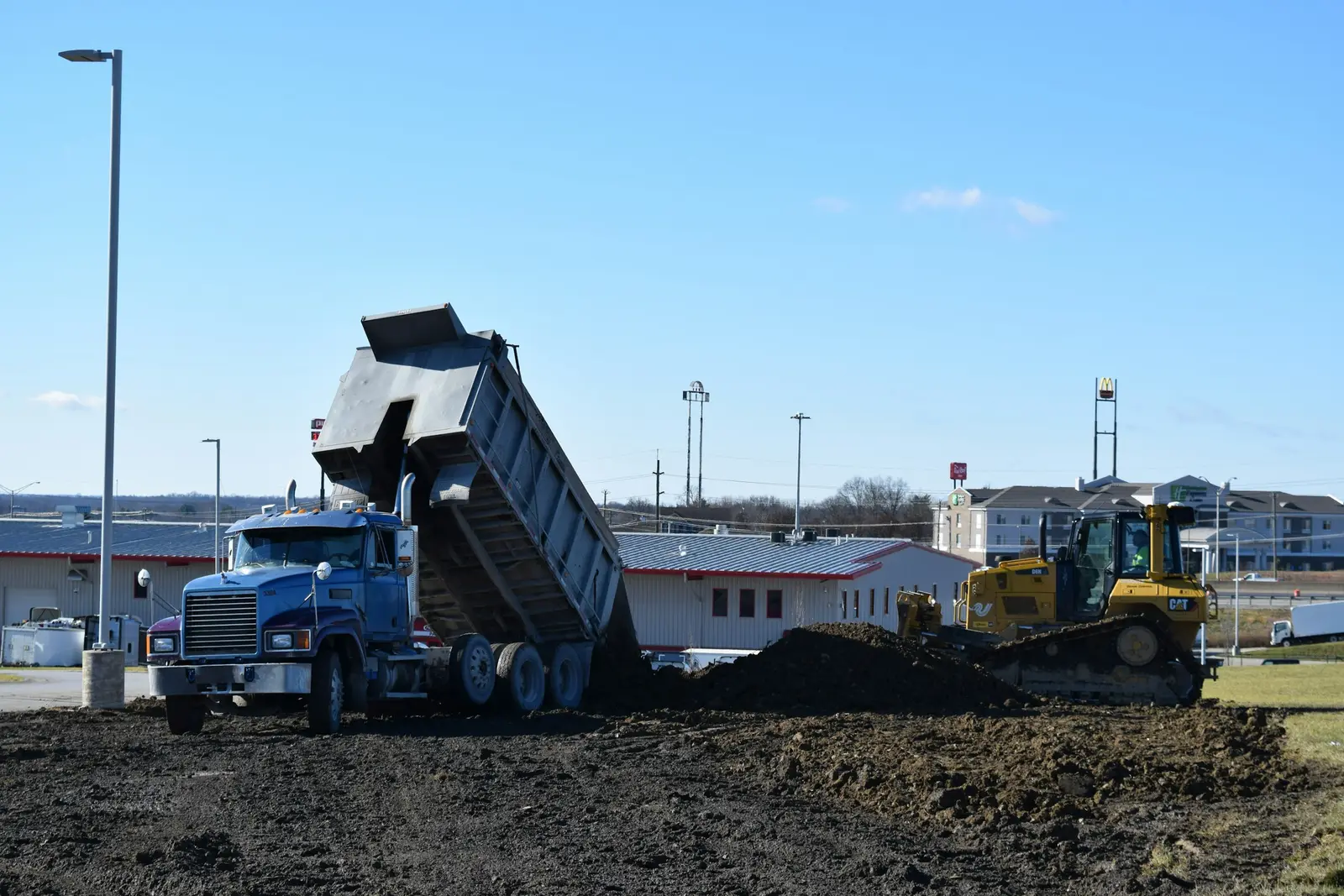
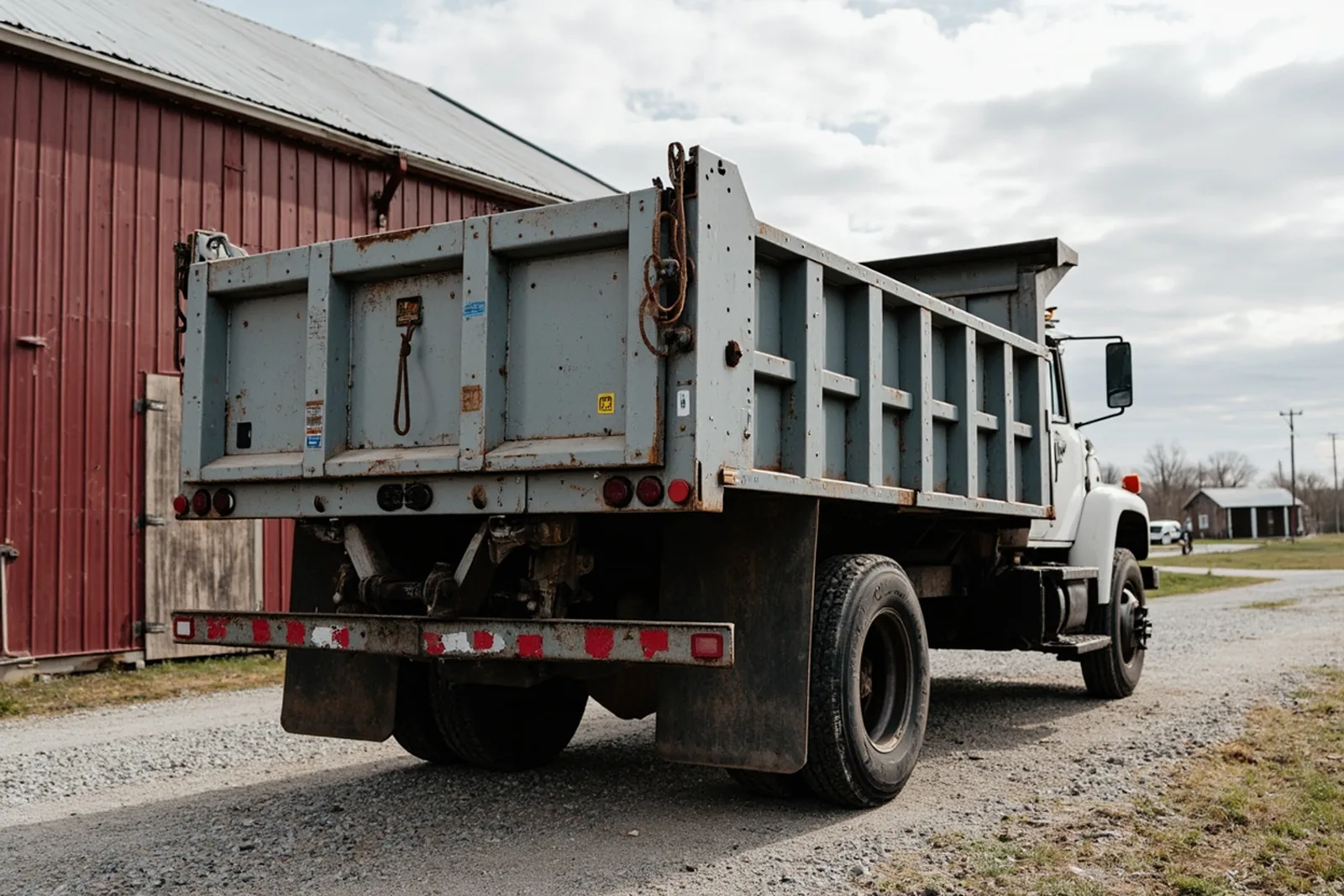
On a dump truck, look hard at the hoist cylinder and hydraulics, the body floor and tailgate hinges, frame rails behind the cab, brakes, tires and any PTO. Ask for maintenance records and whether the truck has ever been in a fleet that sold it at auction. Our dump trucks buying guide and used equipment buying checklist go deeper.
What do monthly payments look like on a Marketplace-priced dump truck?
On a $24,900 asking price, financing $22,410 after 10% down works out to roughly $400 to $600 a month across the scenarios below. Facebook listings change often and many do not show a price, so we used three published dump truck asking prices as comparables for what a Marketplace seller might ask. For more price points, see our dump truck payment examples.
| Truck | Asking price | Mileage | Location | Source | Date seen |
|---|---|---|---|---|---|
| 2011 Ford F550 dump truck | $24,900 | 120,000 mi | Jackson, OH | TruckPaper listing | October 26, 2026 |
| 2004 Ford F650 SD dump truck | $27,900 | 116,994 mi | Draper, UT | TruckPaper listing | October 26, 2026 |
| 2019 Freightliner M2 106 dump truck | $62,500 | 30,663 mi | Longview, TX | TruckPaper listing | October 26, 2026 |
These examples assume 10% down, estimated APRs of 9% and 13%, terms of 48, 60 and 72 months, and payments rounded to the nearest $10, with taxes, fees and insurance excluded.
| Asking price | Down (10%) | Amount financed | Estimated APR | 48 months | 60 months | 72 months |
|---|---|---|---|---|---|---|
| $24,900 | $2,490 | $22,410 | 9% | $560 | $470 | $400 |
| $24,900 | $2,490 | $22,410 | 13% | $600 | $510 | $450 |
| $27,900 | $2,790 | $25,110 | 9% | $620 | $520 | $450 |
| $27,900 | $2,790 | $25,110 | 13% | $670 | $570 | $500 |
| $62,500 | $6,250 | $56,250 | 9% | $1,400 | $1,170 | $1,010 |
| $62,500 | $6,250 | $56,250 | 13% | $1,510 | $1,280 | $1,130 |
These are illustrations, not quotes. Ironmark does not set rates and is not a lender. Your rate and term come from the lender and depend on your credit, time in business, the truck's age and mileage, and the deal structure. Older, high-mileage trucks may get shorter terms than the 72 months shown.
What do lenders look at on a private-party deal?
The same things they look at on any deal, plus proof the seller can deliver a clean title. Expect questions about your credit, time in business and cash flow, and about the truck's age, mileage and value compared with similar listings. On a private sale the lender also needs the seller to cooperate: send a title copy, sign the bill of sale, provide a payoff letter and accept payment from the lender rather than cash from you. A seller who refuses all of that is a seller to walk away from. More on underwriting in what lenders look at. If you are also bidding on trucks, auction equipment financing works differently because the auction house holds the title.
Frequently asked questions
Can I finance a truck with a salvage or rebuilt title?
Sometimes, but expect fewer lenders, a lower advance or a flat no. Disclose the brand up front; it may show on NMVTIS anyway.
Can the lender pay a seller who lives in another state?
Often, yes, but out-of-state titles add DMV steps, and a remote truck makes an independent inspection more important.
What should you have ready for a quote on a private-party purchase?
Have the deal documents and the truck's identity ready before you ask. For a Marketplace or Craigslist purchase, that means:
- The listing link or screenshots, and the agreed price.
- Seller's full legal name (or business name) and phone number.
- VIN or serial number, plus photos of the VIN plate and the title (front and back).
- Mileage and engine hours, with odometer and hour meter photos.
- Your NMVTIS and NICB VINCheck results, and any UCC search you ran.
- The seller lender's name and payoff amount, if there is a lien.
- Inspection notes or photos of the body, hoist, frame and tires.
- Your business details: legal name, time in business, and how much you plan to put down.
For truck-specific terms and lender options, see dump truck financing.