Quick answer
To start a directional drilling business, line up subcontract work first, then buy a small HDD rig, vacuum excavator and locator, usually used and financed. A 2019 Ditch Witch JT20 sold at auction for $82,000 in September 2026 (Construction Equipment Guide), and a used rig, vacuum excavator and locator together add up to about $130,695 (two auction results plus one asking price) before tooling, truck, trailer and insurance.
How do you start a directional drilling business?
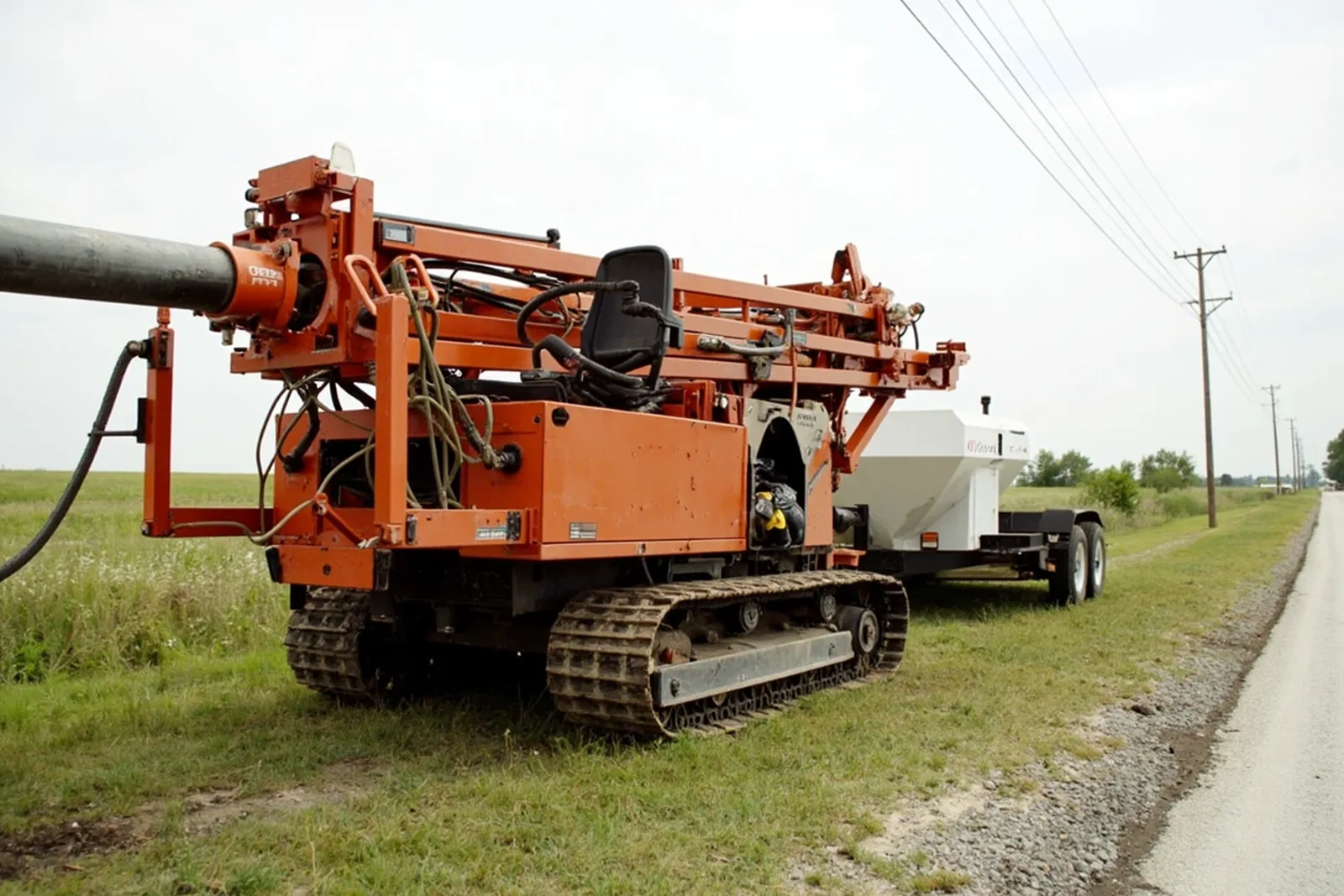
Most new directional drilling businesses start with one small horizontal directional drilling (HDD) rig such as a Ditch Witch JT20, a vacuum excavator, a locating system, tooling, and a truck and trailer, then sell their crew to general contractors and utility or fiber prime contractors as a subcontractor. The equipment is the largest cost and usually the part you finance. Before you buy, line up the work, the licensing and insurance your customers will require, and a realistic budget for the full spread, not just the drill.
A practical order of operations looks like this:
- Pick a market: fiber and telecom drops, power and gas service lines, water and sewer laterals, or irrigation. Each one drives rig size and tooling.
- Talk to the prime contractors and utilities you want to work for. Ask what they require from subs (insurance limits, safety program, prequalification paperwork).
- Form the business, get any state contractor license your work requires, and get insurance quotes.
- Price the equipment spread with real market numbers (below).
- Get financing quotes on the package before you commit at an auction or dealer.
How much does it cost to start a directional drilling business?
With used equipment, a starter spread of a small rig, a vacuum excavator and a locating package can come to roughly $130,000 using recent market figures, before tooling, a truck, a trailer, insurance and working capital. The drill alone drives most of that number, and its price swings widely with age and hours.
Here is one sourced example of a used starter spread, built from figures seen on October 26, 2026:
| Component | Example | Price | Price type | Source | Date |
|---|---|---|---|---|---|
| Drill rig | 2019 Ditch Witch JT20 | $82,000 | Sold at auction | Construction Equipment Guide, JT20 auction results | Sale month September 2026 |
| Vacuum excavator | 2019 Vermeer VX30 | $29,700 | Sold at auction | Construction Equipment Guide, VX30 auction results | Sale month September 2026 |
| Locating and guidance | Used DigiTrak Falcon F5 package (locator, remote display, transmitter, batteries, charger) | $18,995 | Asking price | Plant and Equipment listing (no longer posted) | Seen 2026-10-26 |
| Subtotal | $130,695 |
The subtotal is simple addition of the three figures above. Your actual spread will differ, and you still need to budget for:
- Tooling. Drill rods, bits, housings, reamers, swivels and pulling grips wear out and need replacing. Many used rigs are sold with some rod, but check its count and condition.
- Drilling fluid. Small rigs often carry an onboard fluid system; larger jobs may need a separate mixing system. Bentonite and polymer are consumables you buy every job.
- Truck and trailer. You need a truck rated to tow the rig and a trailer rated for its weight, plus a way to move the vacuum excavator. Check the drill's published weight against the trailer and truck ratings and your state's licensing rules for the combination.
- Insurance, licensing and working capital. General liability, auto, inland marine (equipment) coverage and workers' compensation, plus enough cash to cover payroll and fuel while you wait on customer payments.
We did not find sourced market prices for these items that met our standard on October 26, 2026, so we have not put numbers on them. Get quotes from your dealer, insurer and accountant.
For a deeper look at rig prices by size class, see our HDD drill cost guide.
What does a used small directional drill sell for?
In Construction Equipment Guide's JT20 auction results, seen October 26, 2026, small Ditch Witch JT20 rigs sold at auction in 2026 for $13,500 to $182,500, with late models well over $100,000. Age and hours matter, but so do rod count, maintenance records and whether the rig was run hard on rock.
| Machine | Price | Price type | Source | Date |
|---|---|---|---|---|
| 2016 Ditch Witch JT20 | $36,000 | Sold at auction | Construction Equipment Guide | Sale month March 2026 |
| 2018 Ditch Witch JT20 | $54,000 | Sold at auction | Construction Equipment Guide | Sale month September 2026 |
| 2019 Ditch Witch JT20 | $82,000 | Sold at auction | Construction Equipment Guide | Sale month September 2026 |
| 2022 Ditch Witch JT20 | $155,000 | Sold at auction | Construction Equipment Guide | Sale month May 2026 |
| Ditch Witch JT20, average of non-auction listings | $85,404 | Average asking price | Construction Equipment Guide | Seen 2026-10-26 |
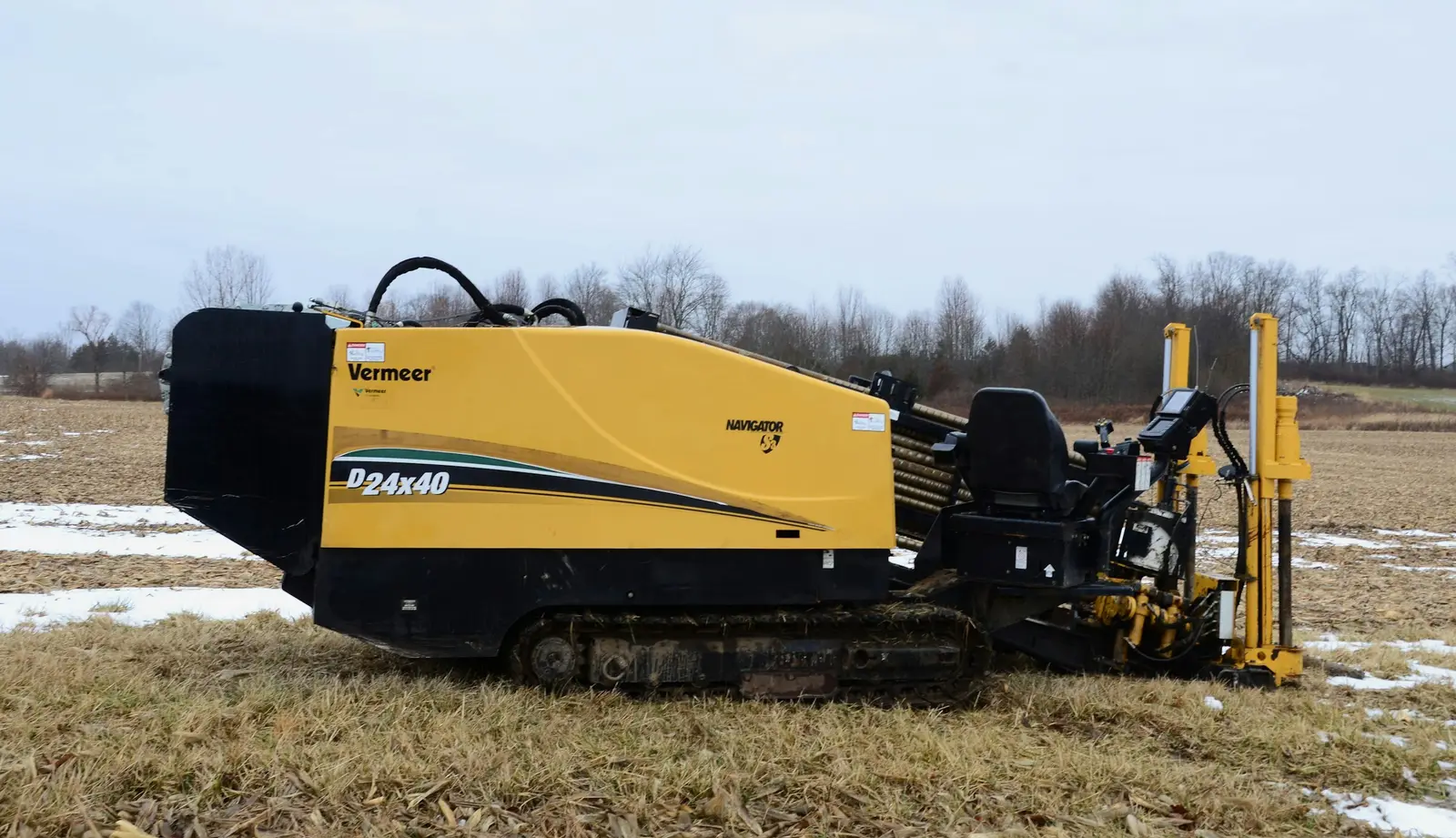
| 2018 Vermeer Navigator D24x40 | $70,000 | Sold at auction | Construction Equipment Guide | Sale month October 2024 |
Two things stand out. First, same-year machines sell far apart: the same Construction Equipment Guide results show two 2018 JT20s sold at auction in September 2026 for $13,500 and $85,000, so the year alone tells you little. Second, the Vermeer D24x40 figure is the most recent result on that page and is two years old, so treat it as a rough reference only.
Our directional drills buying guide covers what to inspect on a used rig before you bid.
Should a new directional drilling business buy new or used?
Used is the common starting point because it lowers the amount you need to finance, but a newer rig can mean less downtime and dealer support when you have no backup machine. A first rig is often your only rig, so a breakdown stops all revenue.
Weigh it this way:
- Used at auction: lowest price, but usually sold as is, with no warranty and fast payment deadlines. Arrange financing before the sale. See how auction equipment financing works.
- Used from a dealer: higher price than auction, but you may get inspection, some warranty and a clearer service history.
- New: highest price, full warranty, and the newest guidance and safety features.
Our new vs. used equipment guide walks through the tradeoffs in more detail.
Where does the work come from?
Most small drilling companies work as subcontractors to fiber, telecom, electric, gas and water contractors, installing conduit and service lines under roads, driveways and yards without open trenching. Building relationships with two or three prime contractors before you buy a rig is the most reliable way to keep the drill busy.
Broadband buildout is one demand driver. The federal Broadband Equity, Access, and Deployment (BEAD) program is described by NTIA as a $42.45 billion federal grant program (seen 2026-10-26), with allocations to all 56 states and territories announced in June 2023. How much of that reaches small drilling subs depends on each state's plan and project timing, so check your state broadband office rather than counting on it.
What licenses, permits and safety steps does a directional drilling business need?
Requirements vary by state and by customer, but almost every job requires a locate request through 811 before digging, and most customers will ask for proof of insurance and a written safety program. Some states also require a contractor or utility contractor license.
- 811 locates. The national 811 program says anyone who plans to dig should contact 811 or their state 811 center "a few business days before you begin any digging," and calls it "the free national before-you-dig service" (811 Before You Dig, seen 2026-10-26). Your state sets the exact notice period and rules, so check with your state 811 center.
- Contractor licensing. Check your state contractor licensing board and any city or county requirements. Some states license underground utility work separately.
- Right of way permits. Work in public roads usually needs a permit from the city, county or state DOT. Often the prime contractor pulls it, but confirm who is responsible.
- Safety. Training on utility strikes, electrical strike systems on the rig, traffic control and trench and excavation safety where it applies.
- Commercial driver licensing. Depending on the combined weight of your truck and trailer, drivers may need a commercial driver's license.
Talk to an attorney or your state licensing board for the requirements that apply to you.
What would monthly payments look like on a directional drill?
On the sourced figures above, illustrative payments run from about $880 a month on a $54,000 used rig to about $3,160 a month on a $130,695 starter spread, depending on rate and term. Your actual payment depends on the lender's rate, term and fees.
These examples assume 10% down, the estimated APRs shown, terms of 48, 60 and 72 months, payments rounded to the nearest $10, and exclude taxes, fees and insurance. They are illustrations, not quotes; Ironmark does not set rates, and lenders set rates and terms.
| Price point | Price | 10% down | Amount financed | Estimated APR | 48 months | 60 months | 72 months |
|---|---|---|---|---|---|---|---|
| 2018 JT20, sold at auction Sept. 2026 | $54,000 | $5,400 | $48,600 | 9% | $1,210 | $1,010 | $880 |
| 2018 JT20, sold at auction Sept. 2026 | $54,000 | $5,400 | $48,600 | 13% | $1,300 | $1,110 | $980 |
| 2019 JT20, sold at auction Sept. 2026 | $82,000 | $8,200 | $73,800 | 9% | $1,840 | $1,530 | $1,330 |
| 2019 JT20, sold at auction Sept. 2026 | $82,000 | $8,200 | $73,800 | 13% | $1,980 | $1,680 | $1,480 |
| Starter spread (rig, vac, locator) | $130,695 | $13,070 | $117,625 | 9% | $2,930 | $2,440 | $2,120 |
| Starter spread (rig, vac, locator) | $130,695 | $13,070 | $117,625 | 13% | $3,160 | $2,680 | $2,360 |
Price sources are in the tables above. Payment = P x r / (1 - (1 + r)^(-n)), where P is the amount financed, r is the estimated APR divided by 12 and n is the number of months.
How do lenders look at a startup directional drilling company?
Ironmark is not a lender. The third-party lenders we work with make their own credit decisions, and for a new business they generally look harder at the owner than at the company. Expect questions about your personal credit, your drilling experience, the cash you are putting in, and whether you have work lined up.
Things that tend to help a startup file:
- Years running a drill or a crew for another contractor, shown on a resume.
- Letters of intent or a subcontract from a prime contractor.
- A clear equipment list with year, hours and serial numbers, and the seller's invoice or auction lot details.
- Bank statements that show your down payment and some working capital.
Read more in what lenders look at.
What should you have ready for a directional drill financing quote?
Having these ready helps a lender review the request:
- The rig's year, make, model, hours, serial number and rod count, plus the seller or auction lot link.
- The same details for any vacuum excavator, locator or trailer you want in the same package.
- Your total package price and how much you plan to put down.
- Your drilling experience and any letters of intent or subcontracts.
- Business formation documents, EIN and any contractor license.
- Recent personal and business bank statements.
- Proof of insurance, or quotes for it if you are just starting.
See directional drill financing for how Ironmark connects drilling contractors with lenders.