Quick answer
To start a towing company, decide what towing you will do, line up calls, buy a truck that fits the work, and get the state license, USDOT number and insurance in place. On October 28, 2026, used rollback tow trucks on My Little Salesman had asking prices from $55,000 to $139,500.
How do you start a towing company?
You start a towing company by deciding what kind of towing you will do, lining up the calls, buying a truck that fits that work, and getting the state license, USDOT number and insurance in place before the first hook. The truck is the biggest cost: on October 28, 2026, used rollback tow trucks on My Little Salesman had asking prices from $55,000 to $139,500, and a new Ford F-550 rollback had an asking price of $99,985 (sources below).
A workable order:
- Pick your work. Consent tows for drivers and motor clubs, police and highway patrol calls, private property impounds, or some mix. Each one has different license, insurance and equipment needs.
- Find the calls before you buy. Talk to body shops, dealers, repair shops and property managers, and ask your state patrol and local police how their rotation list works.
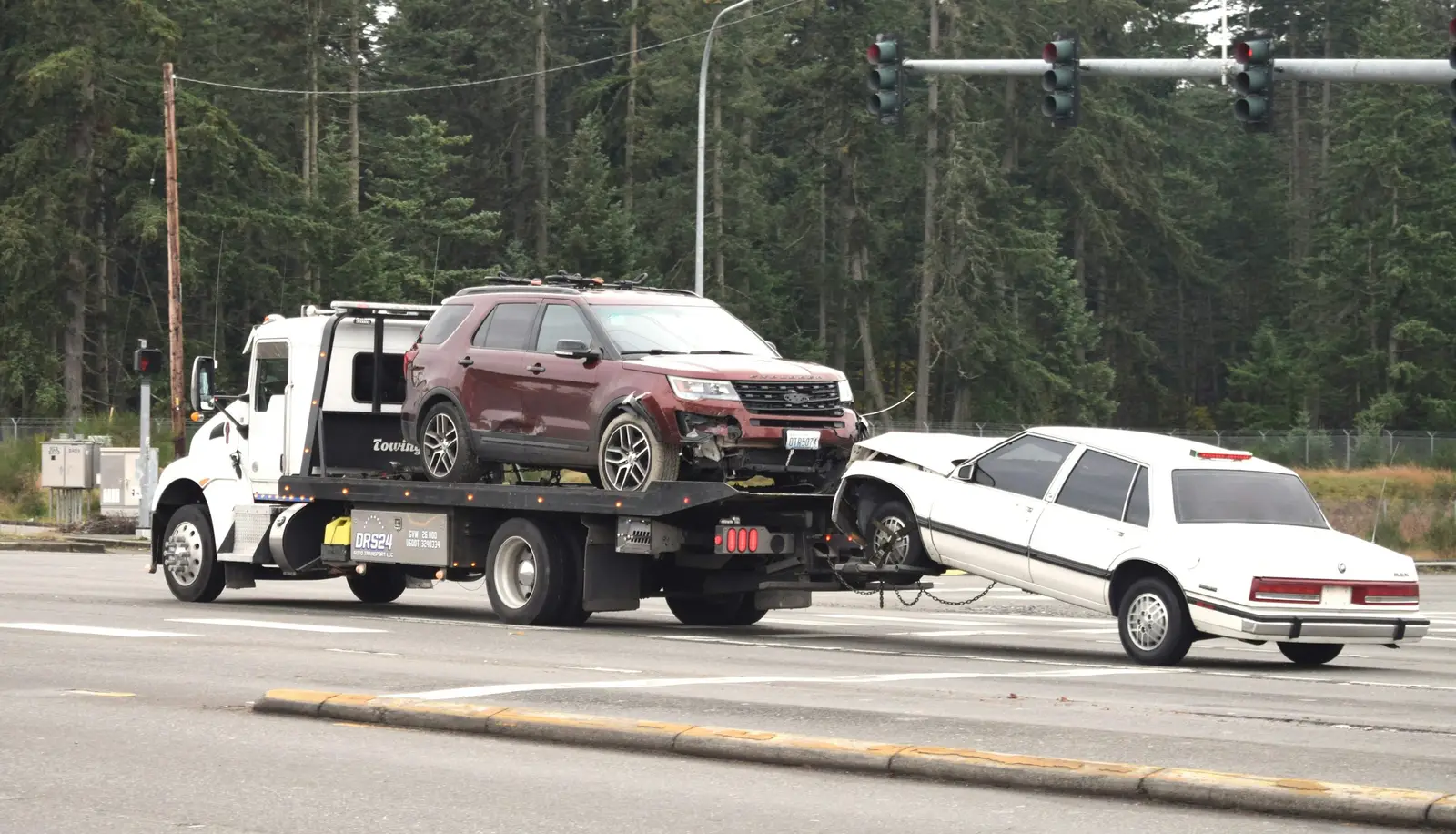
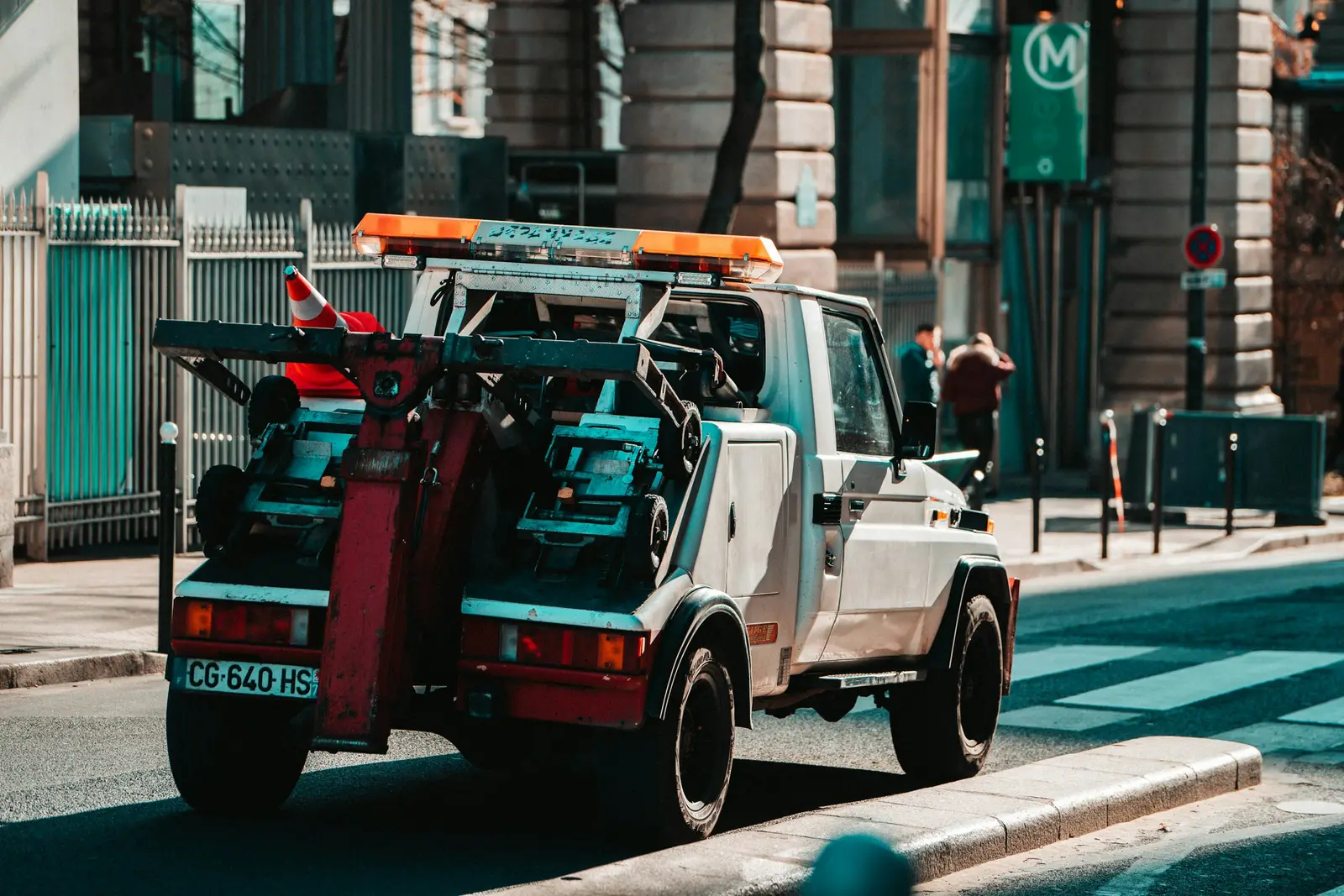
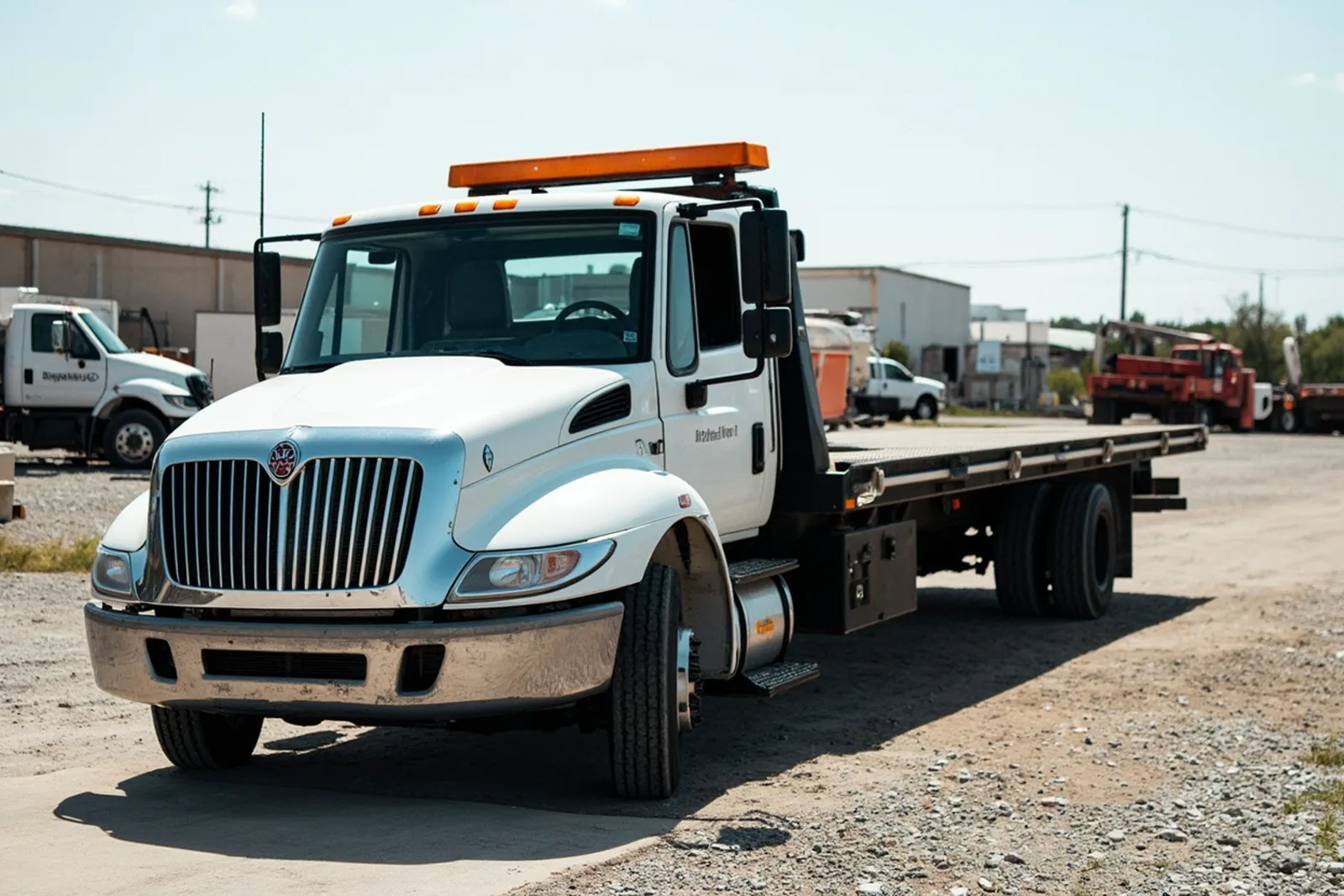
- Choose the truck. A rollback (flatbed) carries the car on the deck. A wheel-lift wrecker lifts one end and tows it. Many first trucks are rollbacks with a wheel lift added.
- Get licensed. USDOT number if required, state towing license or permits, and a CDL if the truck is heavy enough.
- Insure it. Liability and cargo (on-hook) coverage at the levels your state and your customers require.
- Finance the truck with a payment the expected calls can carry, and keep cash for the first few months.
How much does it cost to start a towing business?
The truck sets the budget. Used light and medium duty tow trucks in the listings below run from a $55,000 asking price to $139,500 at asking price in the listings below, and a heavy wrecker costs more. Insurance, licensing and a storage yard come on top, and they depend on your state.
Rollback (flatbed) tow trucks
| Truck | Condition and usage | Price | Source | Date |
|---|---|---|---|---|
| 2008 Peterbilt 335 rollback | Used, 172,182 miles | $55,000 asking price | My Little Salesman listing | Oct 28, 2026 |
| 2022 RAM 5500 with Jerr-Dan 20 ft bed and wheel lift | Used, 32,323 miles, 19,500 lb GVW | $81,995 asking price | My Little Salesman listing | Oct 28, 2026 |
| 2025 Ford F-550 XL rollback, 19.5 ft bed | New, 8 miles | $99,985 asking price | My Little Salesman listing | Oct 28, 2026 |
| 2024 Peterbilt 536 rollback, 22 ft bed | Used, 4,437 hours, 26,000 lb GVW | $105,900 asking price | My Little Salesman listing | Oct 28, 2026 |
| 2025 Freightliner M2 106 crew cab rollback, 22 ft bed | Used, 19,884 miles | $139,500 asking price | My Little Salesman listing | Oct 28, 2026 |
Wheel-lift and boom wreckers
| Truck | Condition and usage | Price | Source | Date |
|---|---|---|---|---|
| 2020 Chevrolet Silverado 5500HD wrecker | Used, 6,767 miles | $72,000 asking price | My Little Salesman listing | Oct 28, 2026 |
| 2022 Ford F-450 4x4 with Miller wrecker body | Used, 57,550 miles | $84,999 asking price | My Little Salesman listing | Oct 28, 2026 |
| 2015 Kenworth T370 Class 7 wrecker | Used, 362,176 miles | $155,000 asking price | My Little Salesman listing | Oct 28, 2026 |
How to read these numbers:
- Asking prices are where negotiation starts, not what trucks sell for. Many tow trucks on the same site were listed at auction or "contact for price".
- The body matters as much as the chassis. Check bed length, deck rating, wheel lift and winch capacity on the body builder's plate.
- Weight decides the license. The RAM 5500 above is listed at 19,500 lb GVW and the Peterbilt 536 at 26,000 lb, both under the 26,001 lb line where a Class B CDL starts (see licenses below).
Our rollback tow truck price guide goes deeper on what drives rollback prices, and the tow trucks buying guide covers inspection.
Beyond the truck, budget line by line for:
- Licenses and permits. In Texas, for example, the tow company license application fee is $350 and each tow truck permit is $75 per truck (TDLR, seen Oct 28, 2026). Other states differ.
- Insurance. Often one of the biggest running costs. Get quotes on the exact truck and driver before you buy.
- Equipment. Wheel lift or dollies if the truck lacks them, chains, straps, lockout tools, safety lights, cones and reflective gear.
- A storage yard, if you plan to do impounds or police tows. Texas licenses vehicle storage facilities separately from tow companies (TDLR towing program, seen Oct 28, 2026).
- Working capital to cover fuel, the truck payment and insurance until motor clubs, shops and property clients pay you.
We do not publish a single national total for these items because they vary too much by state, truck and driver record to be honest as one number.
Should your first tow truck be a rollback or a wrecker?
For most new towing companies, a rollback is the more flexible first truck because it can carry cars that cannot roll, all-wheel-drive vehicles and equipment, and many come with a wheel lift for a second car. A light wheel-lift wrecker costs less to run and is quicker for parking lot and repossession work. A heavy wrecker is a different business with much higher prices and usually a CDL driver.
| Question | Rollback | Light wheel-lift wrecker |
|---|---|---|
| Damaged or non-rolling cars | Carries them on the deck | Harder; may need dollies |
| AWD and low-clearance cars | Usually preferred | Needs dollies or care |
| Tight parking lots and quick hooks | Slower to load | Faster |
| Other paying loads (equipment, small machines) | Yes, within the deck rating | No |
Match the truck to the calls you can actually get. If your first customer is a motor club in a suburban area, a rollback fits. If it is a property management company with tight lots, a wrecker may be faster.
How do towing companies make money?
Towing companies earn from three main kinds of calls: consent tows the vehicle owner asks for (often through a motor club, insurer, dealer or repair shop), police or highway patrol calls from a rotation list, and nonconsent private property tows from parking lots. Storage and related fees add income when you run a licensed yard.
Texas is a useful example because its regulator separates these clearly. TDLR issues three tow truck permit types: Consent, for tows "authorized by the owner of the vehicle"; Private Property, for nonconsent tows authorized by a parking facility owner; and Incident Management, for nonconsent tows "initiated by a peace officer" (TDLR, Apply for a Tow Truck Permit, seen Oct 28, 2026).
Private property tows are often price capped. In Texas, TDLR lists statewide maximum private property tow charges of $272 for a vehicle up to 10,000 lbs, $380 for more than 10,000 but less than 25,000 lbs, and $489 per unit above that, plus a maximum drop fee of $135 for a car of 10,000 lbs or less (TDLR consumer information, seen Oct 28, 2026). Cities and counties can set lower limits.
Storage is regulated too. The same TDLR page lists daily storage of $22.85 for a vehicle 25 feet long or less under the 2023 adjustment, an impoundment fee that may not exceed $20, and a notification fee of up to $50.
Police rotation has entry rules. In New Hampshire, a tow business applies to the director of state police to join the rotation list, must carry at least $1,000,000 in liability coverage including garage keepers' insurance, and must arrive within 30 minutes of being called (60 minutes for heavy duty calls) (RSA 106-B:30, seen Oct 28, 2026). Expect similar applications, inspections and response time rules from your own state patrol and local agencies.
Motor club and consent work is set by contract. Rates, response times and payment terms come from each motor club or account, so get them in writing before you count on that revenue.
How much do tow truck owners make?
There is no reliable public figure for what tow truck owners take home, and online "average salary" numbers usually describe drivers, not owners. What an owner makes is calls per month, times what each call pays, minus the truck payment, fuel, insurance, labor, yard costs and repairs.
You can test a plan with real numbers. Take the 2022 RAM 5500 rollback above: at 9% estimated APR over 60 months, the payment example below is about $1,530 a month. At the Texas private property maximum of $272 for a light duty tow, that is about 6 maximum-rate tows a month just to cover the truck payment, before fuel, insurance or wages. Consent and motor club calls pay whatever each account's contract says, so run the same math with the rates your actual accounts quote you, and review it with your accountant.
What licenses and permits does a towing company need?
Most towing companies need a business registration, a state towing license or permit where the state has one, a USDOT number if the truck meets federal or state thresholds, and a CDL for drivers of heavier trucks. Rules vary by state and city, so check each one.
- USDOT number. FMCSA requires one for a vehicle with a GVWR or gross combination weight rating of 10,001 pounds or more used in interstate commerce, and lists 39 states and territories (including Texas, Florida, California and New York) that require USDOT numbers for intrastate commercial vehicle registrants (FMCSA, Do I need a USDOT number?, seen Oct 28, 2026). Both trucks above with a listed GVW (19,500 lb and 26,000 lb) are over that line.
- CDL. A Class B CDL covers a single vehicle with a GVWR or gross vehicle weight of 26,001 pounds or more, or such a vehicle towing one of 10,000 pounds or less (FMCSA, CDL classes, seen Oct 28, 2026). FMCSA requires first-time Class A or Class B applicants to finish Entry-Level Driver Training with a registered provider before the skills test. If your drivers do not hold a CDL, look at trucks rated at or under 26,000 lb GVW, like the Peterbilt 536 above, and confirm the rating on the door sticker and the licensing rule for the truck and towed load with your state.
- State towing license. In Texas, "tow truck companies, tow trucks and tow truck operators must be licensed by TDLR" (TDLR towing program, seen Oct 28, 2026). That means a company license, a permit for each truck, and an operator license for each driver.
- Police rotation approval. Usually a separate application to the state patrol or local agency, with its own insurance, inspection and response time rules.
- Storage facility license if you keep towed vehicles, where your state requires one.
Have your attorney or compliance advisor confirm which rules apply to your trucks, your routes and the type of towing you do.
How much insurance does a tow truck need?
The legal minimum depends on your state and the type of tow, and customers or police agencies often require more. In Texas, the minimums per truck per incident are $500,000 liability and $50,000 cargo for incident management towing, $300,000 liability and $50,000 cargo for private property towing, and $300,000 liability for consent towing (TDLR, seen Oct 28, 2026).
| Texas permit type | Liability minimum | Cargo minimum |
|---|---|---|
| Incident management (police initiated) | $500,000 | $50,000 |
| Private property (nonconsent) | $300,000 | $50,000 |
| Consent | $300,000 | Not required |
If you tow for hire across state lines with a truck of 10,001 pounds GVWR or more, the federal minimum for nonhazardous property is $750,000 in public liability (49 CFR 387.9, seen Oct 28, 2026). New Hampshire's state police rotation requires at least $1,000,000 including garage keepers' coverage, as noted above. Get insurance quotes before you sign for a truck, because a lender will also want proof of coverage.
What goes in a tow truck business plan?
A tow truck business plan only needs to answer four questions with numbers: where the calls come from, what each call pays, what the truck and its running costs are, and how long your cash lasts before revenue covers them. Lenders read it for the same answers.
- Service area and call sources. Named motor clubs, shops, dealers, property managers and rotation lists, with the status of each (signed, applied, in talks).
- Rates. The rates each account pays, and any state or city caps on nonconsent tows and storage.
- The truck. Year, chassis, body, GVW, asking price and why it fits the work.
- Costs. Truck payment, insurance quote, fuel, driver pay, yard rent, licenses and a repair reserve.
- Licenses. USDOT number, state towing license and permits, CDL status.
- Your experience. Years driving or running tow trucks, and for whom.
How do you finance your first tow truck?
A first tow truck is usually financed with an equipment loan or lease secured by the truck itself. A lender looks at your credit, your towing experience, any signed accounts or rotation approvals, your down payment, and the truck's age, miles and value. Ironmark is not a lender: we connect you with third-party lenders, and those lenders make the credit decision and set the rate and terms.
A startup without business tax returns is usually judged more on the owner's personal credit, years of towing experience, the down payment and evidence of work lined up. Our article on what lenders look at explains each factor, and new vs used equipment covers the trade-offs of an older truck.
What would the monthly payment be on a tow truck?
On the listings above, payments range from about $890 a month (the $55,000 used rollback, 72 months, 9% estimated APR) to about $3,740 a month (the $155,000 used heavy wrecker, 48 months, 13% estimated APR).
These examples assume 10% down, estimated APRs of 9% and 13%, terms of 48, 60 and 72 months, payments rounded to the nearest $10, and exclude taxes, fees and insurance.
| Truck (asking price) | Down payment (10%) | Amount financed | Estimated APR | 48 months | 60 months | 72 months |
|---|---|---|---|---|---|---|
| 2008 Peterbilt 335 rollback (used), $55,000 | $5,500 | $49,500 | 9% | $1,230 | $1,030 | $890 |
| 2008 Peterbilt 335 rollback (used), $55,000 | $5,500 | $49,500 | 13% | $1,330 | $1,130 | $990 |
| 2020 Chevrolet 5500HD wrecker (used), $72,000 | $7,200 | $64,800 | 9% | $1,610 | $1,350 | $1,170 |
| 2020 Chevrolet 5500HD wrecker (used), $72,000 | $7,200 | $64,800 | 13% | $1,740 | $1,470 | $1,300 |
| 2022 RAM 5500 rollback (used), $81,995 | $8,199.50 | $73,795.50 | 9% | $1,840 | $1,530 | $1,330 |
| 2022 RAM 5500 rollback (used), $81,995 | $8,199.50 | $73,795.50 | 13% | $1,980 | $1,680 | $1,480 |
| 2025 Ford F-550 rollback (new), $99,985 | $9,998.50 | $89,986.50 | 9% | $2,240 | $1,870 | $1,620 |
| 2025 Ford F-550 rollback (new), $99,985 | $9,998.50 | $89,986.50 | 13% | $2,410 | $2,050 | $1,810 |
| 2015 Kenworth T370 wrecker (used), $155,000 | $15,500 | $139,500 | 9% | $3,470 | $2,900 | $2,510 |
| 2015 Kenworth T370 wrecker (used), $155,000 | $15,500 | $139,500 | 13% | $3,740 | $3,170 | $2,800 |
These are illustrations, not quotes. Ironmark does not set rates and is not a lender; your actual rate, term and down payment come from the lender and depend on your credit, the truck and the deal. Older, high-mileage trucks may not qualify for the longest terms.
What do you need for a tow truck financing quote?
- The truck you want: year, chassis, body builder and model, bed length or wrecker rating, GVW, miles, VIN, asking price, and the seller (dealer, auction or private party)
- Your down payment amount and where it is coming from
- Your driver's license or CDL, and your years of towing experience
- Business formation documents, EIN, and USDOT number and state towing license if you have them
- Signed motor club, shop or property accounts, rotation approvals, or a list of the work you expect
- Personal financial statement and recent bank statements; business tax returns if the company already operates
- Your insurance agent's contact for proof of coverage
To see how Ironmark connects towing companies with lenders, go to tow truck financing.
Buying checklist
Before you buy
- Decide your mix of consent, police rotation and private property work
- Line up named accounts or rotation applications
- Get insurance quotes on the specific truck and driver
- Check the truck's GVW against your drivers' licenses
Inspecting a used tow truck
- Read the body builder's capacity plate for the deck, wheel lift and winch
- Run the bed, wheel lift and winch through a full cycle
- Check hydraulic hoses, cylinders and the deck for leaks, cracks and wear
- Ask for chassis and body service records
Before the first tow
- USDOT number and state towing license and truck permits in place if required
- Liability and cargo coverage at your state's and your customers' levels
- Rate sheet that respects any state or city caps on nonconsent and storage fees
- A licensed storage yard if you will do impounds or police tows