Quick answer
Contractors usually finance heavy equipment with an equipment loan or a lease, and the machine serves as collateral. Lenders commonly review time in business, credit history, bank statements, backlog and the machine's age, hours and condition. New, used and rental buyout machines can all be financed. The best structure depends on how long you will keep the machine and how steady your work is.
Heavy equipment financing looks simple from the outside: pick a machine, sign the paperwork, go to work. Contractors who get the most out of it do more homework first. They match the machine to their actual work, document the equipment well, and compare offers on full cost instead of the payment alone. This guide answers the questions contractors search most, for the machines small and midsize firms buy most often.
How do you finance heavy equipment?
Most contractors finance heavy equipment with an equipment loan or a lease. You choose the machine, get a written quote, and a lender reviews your business and the machine together. The machine serves as collateral, which is why its age, hours and condition matter as much as your financials.
Four terms show up on nearly every deal:
- Collateral. The asset that secures the financing. Here, it is the machine.
- UCC filing. A public notice a lender files to record its interest in equipment that has no title, such as most excavators and loaders. It is released when the balance is paid.
- $1 buyout lease and FMV lease. A $1 buyout lease ends with you owning the machine for a nominal amount. A fair market value (FMV) lease lets you buy at market value, renew, or return the machine at the end.
- Down payment. Money you put toward the price up front. Whether one is needed, and how much, varies by lender and deal.
For a step-by-step view of the process, see our equipment financing overview. To weigh the two main structures, read equipment leasing vs. financing.
What is the best way to finance heavy equipment?
The best way depends on how long you will keep the machine and how many days a year it will run. A loan or $1 buyout lease fits machines you plan to own for years. An FMV lease can fit machines you replace on a cycle. Renting fits machines that sit idle most of the year.
Before you shop, write down:
- The three or four job types that make up most of your revenue
- Typical site conditions: tight residential lots, open pads, soft ground, rock
- What your trailer and truck can legally haul
- How many days a year the machine will actually run
- Whether you rent this type of machine now, and how often
That list narrows the size class quickly and gives you a clear answer when a lender asks why you need the machine. Confirm the machine’s transport weight against your trailer rating, and check that its coupler and auxiliary hydraulics will run the attachments you own. If you need a new trailer, it can often be financed alongside the machine.
Which construction machines are commonly financed?
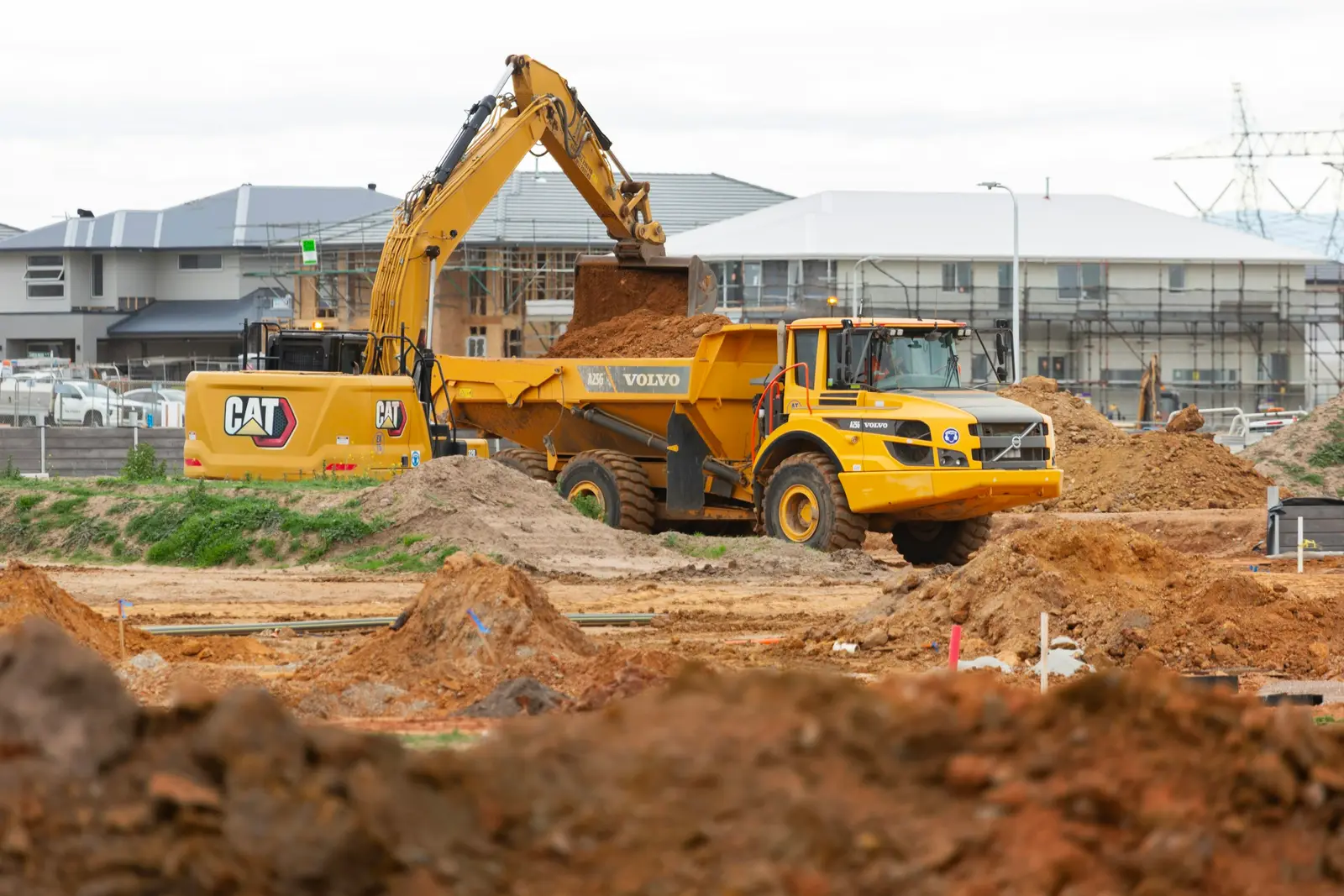
Excavators, skid steers, compact track loaders, wheel loaders, dozers, backhoes and articulated dump trucks are all commonly financed. Check hours, service history and the high-wear parts on each one, especially the undercarriage on tracked machines and tires on wheeled ones. For machine-specific detail, see excavator financing and dump truck financing.
| Machine | Typical use | What to check before you buy |
|---|---|---|
| Mini or compact excavator | Utilities, landscaping, residential trenching | Hours, undercarriage wear, hydraulic leaks, thumb and coupler |
| Full-size excavator | Mass excavation, site work, loading trucks | Undercarriage, swing bearing play, boom and stick welds |
| Skid steer or compact track loader | Grading, material handling, attachments | Lift arm pins and bushings, track or tire wear, auxiliary hydraulics |
| Wheel loader | Loading, stockpiling, yard work | Articulation joint, tires, transmission shifting, bucket wear |
| Dozer | Clearing, rough grading | Undercarriage life remaining, blade and cutting edge, final drives |
| Articulated dump truck | Hauling on rough or soft ground | Articulation and oscillation joints, tires, bed wear, brakes |
| Backhoe loader | General utility work | Pins and bushings, outriggers, 4WD engagement, loader arm wear |
On newer machines, ask for telematics history and stored fault codes, and confirm the serial number or PIN matches the paperwork. If you do underground work, our page on directional drill financing covers HDD rigs.
How hard is it to get a heavy equipment loan?
It depends on the whole file, not one number. Lenders review the business and the machine together, and strength in one area can help offset a weaker one. A contractor with steady deposits, a clear backlog and a well-documented machine is usually easier to review than one with thin records.
On the business side, lenders commonly look at time in business, the owner’s experience, business and personal credit, recent bank statements, existing equipment payments, and backlog or signed contracts. On the machine side, they look at year, make, model, serial number, hours, condition, the seller and whether the price makes sense. For the full picture, read what lenders look at.
If your credit has rough spots, explain them up front. Lenders weigh credit alongside cash flow, experience and the equipment, and requirements vary by lender. No one can promise approval, but context and complete documents give you the best chance of a clear answer.
Can you finance used construction equipment?
Yes. Used machines are financed regularly from dealers, rental fleets, auctions and private sellers, though lenders look harder at age, hours and condition. Each source has trade-offs:
- New. Warranty coverage and a known history, at a higher price.
- Used from a dealer. Some reconditioning, cleaner paperwork, sometimes a limited warranty.
- Auction or private seller. Potentially lower prices, but you carry more condition risk and must verify title and liens.
- Rental fleet buyout. Often a known service history on a machine you may already run.
On any used machine, consider an independent inspection, fluid analysis on the engine and hydraulics, and an undercarriage measurement on tracked machines. For a deeper comparison, read new vs. used equipment, and work through the used equipment buying checklist before you commit.
How long can you finance heavy equipment?
Terms vary by lender, machine and deal. Lenders commonly match the term to the machine’s expected working life, so a new excavator may be offered a longer term than an older one with high hours. Ask each lender what it can offer on the specific machine.
A longer term lowers the payment but usually raises the total you pay. Pick a term you can carry through slow months without outlasting the machine’s useful life.
How do you compare heavy equipment financing rates and offers?
Rates and terms vary by lender, credit profile, machine and structure, so compare total cost rather than the monthly payment. A payment calculator helps with budgeting, but only written quotes show your real terms. Ask each lender:
- Is it a loan or a lease, and what happens at the end?
- What is the total of all payments over the term?
- What fees apply: documentation, origination or lien filing?
- Is there a prepayment penalty?
- Is money due at signing, and how much?
- Are seasonal payment options available?
- What insurance coverage is required?
Getting a quote
Send a Quick Quote on the contact page with the machine details, the seller and when you need it on site. A real person at Ironmark follows up to review the request. Financing is provided by third-party lenders and is subject to their approval.
Frequently asked questions
What is an equipment loan?
An equipment loan is financing used to buy a specific machine, where the machine itself secures the debt. You own the equipment, and the lender records its interest, often through a lien on a title or a UCC filing, until the balance is paid. Once you make the final payment, the lien is released and the machine is yours free and clear.
Can I finance a skid steer or mini excavator by itself?
Often, yes. Skid steers, compact track loaders, mini excavators and attachments are financed regularly, sometimes on their own and sometimes bundled with a larger machine or a trailer. Smaller requests can involve less paperwork, but that varies by lender, so ask what each one needs for the amount you are financing.
Should I rent or finance a machine I only use part of the year?
If a machine sits for much of the year, renting it for specific jobs can cost less than carrying a payment. If you rent the same type of machine again and again, financing may make more sense. Track your rental spend for a full season, then compare it against a written financing quote before you decide.
Can I finance a machine I am already renting?
Some rental companies offer rental purchase options, and some lenders will finance a buyout of a machine you have been renting. Ask the rental company for a written buyout price, the machine's hours and its service history, then share that with the lender so it can review the unit like any other used machine.
Does seasonal work hurt my chances of getting construction equipment financing?
Seasonality is normal in construction, and lenders who work with contractors expect it. Some lenders offer payment schedules that follow a seasonal pattern, though availability varies by lender and deal. Bank statements covering a full year help show how your revenue moves through slow and busy months.